

You probably already own the best gutter cleaner for light grime: dish soap, white vinegar or baking soda. Homemade mixes are cheap and gentle, but they have limits, and one popular shortcut, mixing bleach with other cleaners, is dangerous.
For general dirt on the outside of gutters, mix 1 to 2 tablespoons of dish liquid per gallon of warm water. For mildew, use white vinegar and water in equal parts, or diluted bleach on its own. Use a baking soda or cream of tartar paste for small stubborn stains. Test every mix on a hidden spot first, rinse well, and never mix bleach with vinegar, ammonia or other cleaners. Old black tiger stripes usually need a store-bought gutter brightener.
Product links on this page are affiliate links. See our disclosure at the end.
Homemade gutter cleaners at a glance
| Solution | Recipe | Best for | Watch out for |
|---|---|---|---|
| Dish soap | 1 to 2 tbsp dish liquid per gallon of warm water | Everyday dirt, pollen, light streaks | Use hand dish liquid, not dishwasher detergent |
| Vinegar | Equal parts white vinegar and warm water | Mildew, mineral spots | Acidic: rinse off aluminum, don’t let it sit |
| Baking soda paste | 3 parts baking soda to 1 part water | Small stubborn stains | Lightly abrasive; rub gently |
| Cream of tartar paste | 2 parts cream of tartar to 1 part water | Dull or discolored spots | Test first on damaged finishes |
| Diluted bleach | Bleach and water only | Stubborn mildew | Never mix with other cleaners; protect plants |
Before you start: inside vs outside
Cleaning solutions are mainly for the outside face of the gutter, where streaks and mildew show. The inside needs debris removal, not chemicals: scoop out leaves, then flush the trough and downspouts with a hose. Our guide to cleaning gutters from the ground covers the tools, and the downspout guide covers clogs.
For every recipe below, wear gloves and eye protection, wet nearby plants and siding first, work in small sections in the shade, and rinse each section before it dries.
1. Dish soap and warm water
This is the safest place to start on any gutter material. LeafFilter recommends 1 to 2 tablespoons of biodegradable hand dish liquid per gallon of warm water. Don’t use dishwasher detergent, which is harsher.
- Mix the dish liquid into a bucket of warm water.
- Wet the gutter face with a hose.
- Wipe with a soft brush, sponge or microfiber mitt on a pole.
- Rinse with the hose and move to the next section.
2. White vinegar and water

Vinegar is a mild acid that helps with mildew and mineral deposits. Mix equal parts white vinegar and warm water, and add a squirt of dish soap for extra cleaning power. Scrub it on and rinse it off. Because vinegar is acidic, don’t leave it sitting on aluminum for long, and test it first on painted or colored gutters.
Skip the old “plug the downspout and soak for an hour” trick. Filling the gutter with solution adds weight, puts acid on the metal for a long time, and doesn’t clean the face, which is where stains show.
3. Diluted bleach for mildew

Bleach kills mildew but won’t remove tiger stripes or general grime. LeafFilter suggests equal parts bleach and water for stubborn mildew spots, applied with a soft brush or cloth. Start weaker on painted or colored gutters and test first.
Never mix bleach with vinegar, ammonia or any other cleaner. The CDC warns that these mixes can release chlorine and chloramine gases that damage the lungs. Many detergents and glass cleaners contain ammonia, so if you use bleach, use it with water only. Soak plants with water before and after, and rinse the gutter thoroughly.
4. Baking soda paste
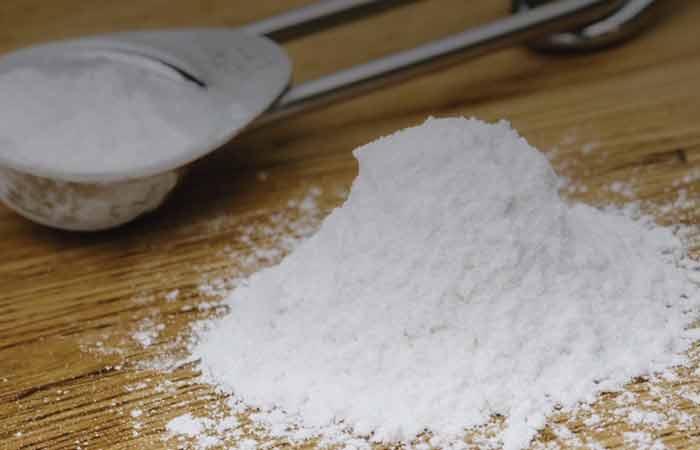
For a small stain, mix 3 parts baking soda to 1 part water into a paste, LeafFilter’s ratio. Rub it on with a damp sponge, firmly enough to lift the stain but not hard. The paste is lightly abrasive and can dull paint if you scrub too hard. Rinse well.
5. Cream of tartar paste

Cream of tartar (potassium bitartrate) is a mild acid that can brighten dull, discolored spots. Mix 2 parts cream of tartar to 1 part water, brush it on, leave it for 10 to 15 minutes and wash it off. LeafFilter advises against using it on delicate or already damaged finishes and recommends testing a hidden area first.
TSP substitute

A TSP substitute (often labeled TSP-PF) is a strong degreaser sold for cleaning surfaces before painting. It works on greasy, grimy gutters, but mix it exactly as the label says and rinse it off completely. Don’t add bleach to it unless the label gives that recipe.
Rather not climb that high?
See what professional gutter cleaning costs in your area before you buy tools or rent a tall ladder. Free, no sign-up.
See local gutter cleaning prices →When to buy a gutter cleaner instead
Homemade mixes handle light dirt and fresh streaks. Old black tiger stripes are residue bonded to the gutter’s oxidized paint, and soap, vinegar and bleach rarely shift them. A product made for gutters saves a lot of scrubbing. Our tiger stripes guide covers the method in detail.
CHOMP! World’s Best Gutter Cleaner

CHOMP! gutter cleaner is ready to use on gutters, siding and exterior trim, including aluminum, vinyl and steel. Spray or wipe it on, wipe it off, and rinse with a hose. It’s the easiest step up from homemade mixes.
Krud Kutter Multi-Purpose House Wash
Krud Kutter’s dedicated gutter cleaner is hard to find now, but the Krud Kutter Multi-Purpose House Wash works on gutter exteriors, siding, trim and window frames, and it contains no bleach or ammonia. Spray it on, leave it for the time on the label, scrub with a soft brush and rinse.
Simple Green All-Purpose Cleaner

Simple Green All-Purpose Cleaner concentrate is a multi-surface concentrate you can use on gutters, trim and siding. Dilute it as the label directs for exterior cleaning, scrub with a soft brush and rinse before it dries. It’s a good general cleaner, but it isn’t a tiger stripe specialist.
Jomax House Cleaner and Mildew Killer

Jomax House Cleaner and Mildew Killer is a mildew-killing concentrate that you mix with household bleach and water, exactly as its label directs. The label recipe is 1 quart of Jomax, 3 quarts of bleach and 4 gallons of water, which makes about 5 gallons and covers around 1,000 sq ft. Spray it on, wait about five minutes and rinse; no scrubbing is needed. It’s for mold and mildew, not tiger stripes. Follow the label’s plant-protection steps.
Pro brighteners: Gutter Butter, Gutter Zap and F-13

Contractors use concentrated gutter brighteners such as Gutter Butter, Gutter Zap and F-13 Gutter Grenade for heavy tiger stripes. They’re strong, so dilute as directed, wet surrounding siding and plants, keep dwell time short and rinse thoroughly.
Homemade gutter cleaner FAQs
What is the best homemade gutter cleaner?
Warm water with 1 to 2 tablespoons of dish liquid per gallon. It’s safe on aluminum, vinyl and steel and handles most everyday dirt.
Is vinegar safe on aluminum gutters?
A 50/50 vinegar mix is fine for a quick scrub if you rinse it off. Don’t let it sit for long, since vinegar is acidic and aluminum reacts with acids.
Can I mix bleach and dish soap?
Avoid it. The CDC advises never mixing bleach with other cleaners, and some detergents contain ammonia. Use bleach diluted with water only.
Will homemade cleaners hurt my plants?
Dish soap and vinegar mixes are low risk if you rinse well. Bleach can damage plants, so soak them with water before and after.
Related gutter guides
- How to clean the outside of gutters
- How to pressure wash gutters safely
- Leaf blower gutter cleaning kits
- Gutter cleaning tools for two-story houses
- How often to clean gutters
- Gutter guard comparison
Sources: LeafFilter, homemade gutter cleaning solutions; CDC MMWR on unsafe cleaning practices; Jomax House Cleaner technical data; Jomax mixing and coverage (Do it Best); J. Racenstein, tiger stripe removal.
Affiliate disclosure: RoofScour is reader-supported. As an Amazon Associate we earn from qualifying purchases made through links on this page, at no extra cost to you. Product picks follow the criteria in the article, not commission rates.