

Lichen on your roof looks harmless — but it is not. It quietly eats into your shingles, tiles, or slates. This guide shows you exactly how to remove lichen from your roof, what kills it, and how to stop it from coming back.
What is lichen on a roof?
Lichen is a living organism made up of two parts: fungus and algae. These two work together in a tight partnership. The fungus provides structure, while the algae produces food through sunlight. Together, they form the crusty, patchy growth you see spreading across roof surfaces.
Lichen is not mold, and it is not moss. Mold is a fungus that grows in dark, damp places indoors. Moss is a soft plant. Lichen is a much tougher organism — it grips surfaces tightly and grows slowly but steadily over years.
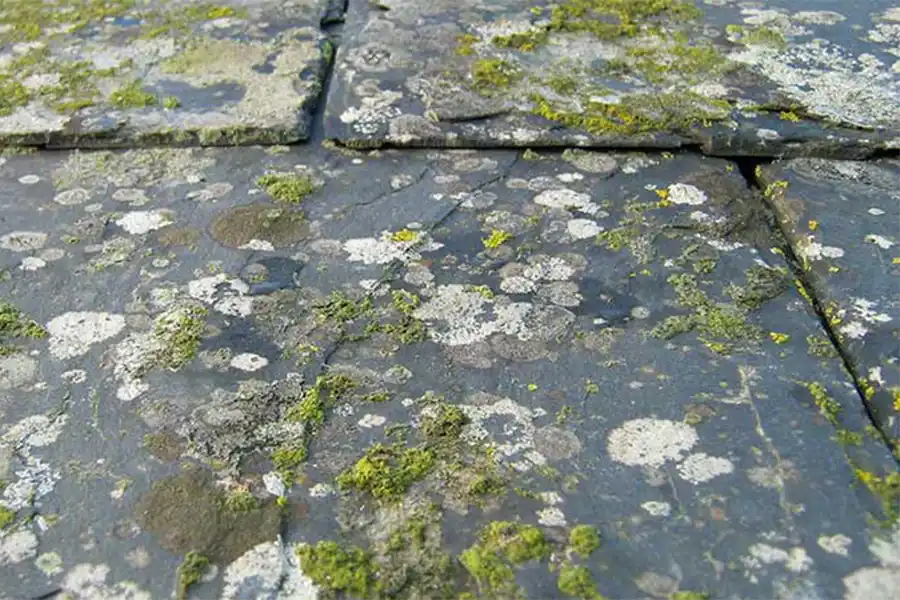
What causes lichen growth on a roof?
Lichen thrives in specific conditions. Your roof becomes a perfect host when these four factors are present:
Moisture — Roofs that stay wet longer are much more likely to grow lichen. Blocked gutters and poor drainage create damp zones.
Shade — Trees that overhang the roof block sunlight. Shaded areas dry slowly, giving lichen time to establish and spread.
Organic debris — Leaves and twigs trap moisture and nutrients on the surface. This creates an ideal breeding ground for lichen.
Aging surfaces — Older roofs are rougher in texture. Rough surfaces grip lichen spores more easily than smooth, newer materials.
Types of lichen on roofs
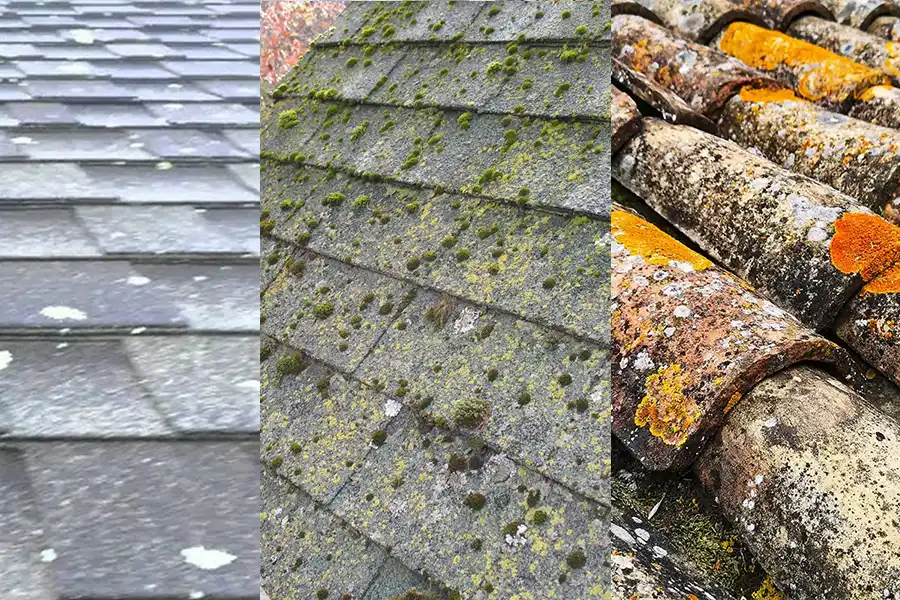
Lichen comes in several forms and colors. Knowing which type you have helps you choose the right removal method.
White lichen on roof
White or pale gray lichen is the most common type on roofing. It often looks like a powdery crust. White lichen blends into lighter-colored tiles, making it easy to miss until it has already spread widely.
Yellow lichen on roof
Yellow or orange lichen often appears on south-facing slopes where there is more sunlight. It is visually striking and tends to appear on stone, slate, or clay tiles. This type is called crustose lichen and bonds tightly to the surface.
Green lichen on roof shingles
Green lichen is often confused with moss or algae. It grows on asphalt shingles and can be harder to remove because it penetrates the granule layer. If you see green patches on your roof shingles, act quickly — this type spreads fast in wet climates.
Can lichen damage a roof?
Yes — lichen can cause serious long-term damage to your roof. Here is what happens step by step.
Lichen has tiny root-like structures called rhizines. These dig into the surface of your shingles or tiles. As the lichen grows, it holds moisture against the roof material. This speeds up wear and leads to rot, cracking, and shingle separation.
Warning: On asphalt shingles, lichen loosens the protective granules on the surface. Once those granules are gone, UV rays break down the asphalt underneath — shortening your roof’s lifespan by five or more years.
Lichen also produces mild acids as a byproduct of its biological processes. These acids slowly erode shingles, tiles, and slate. On a slate roof, heavy lichen growth can cause surface flaking that weakens the stone over time.
Beyond structural damage, lichen on your roof can affect your homeowner’s insurance. Some insurers will raise your premiums or decline coverage if they see a lichen-covered roof during an inspection.
How to remove lichen from a roof
There are several ways to remove lichen from a roof. The best method depends on your roof type, the extent of the growth, and how comfortable you are working at height.
Safety first: Only work on your roof on dry days. Use non-slip shoes and a stable ladder. If your roof is steep or you are unsure, hire a professional.
Step-by-step: how to remove lichen from a roof yourself
Step 1 — Wet the lichen. Use a garden hose to wet the affected area lightly. Moisture softens the lichen, making it easier to treat.
Step 2 — Apply your chosen solution. Use a pump sprayer to apply a lichen-killing solution. Work from the top of the roof downward to avoid re-contaminating clean areas. Cover all affected spots thoroughly.
Step 3 — Let it soak. Give the solution 15–30 minutes of contact time. For chemical solutions, follow the manufacturer’s instructions. For bleach, do not leave it longer than 20 minutes.
Step 4 — Gently scrub stubborn patches. Use a soft-bristled brush and scrub lightly from the top down. Do not use a wire brush — it damages granules and tile surfaces.
Step 5 — Rinse with low-pressure water. Use a garden hose, not a pressure washer. Rinse away all residue and dead lichen. Protect any plants or garden beds below the roof before rinsing.
Step 6 — Repeat if needed. Heavy lichen growth may need two or three treatments. For commercial products, the dead lichen may wash away naturally with rain over the following weeks.
Warning: Never use a pressure washer on asphalt shingles. High pressure strips the protective granule layer and can void your manufacturer’s warranty.
What kills lichen on a roof?
Several solutions kill lichen effectively. Each has its own strengths and limitations.
Bleach solution (use with caution)
Mix one part bleach with one part water. Spray, wait 15–20 minutes, then rinse gently. Bleach kills lichen on contact but requires care around plants — bleach runoff harms vegetation.
White vinegar (eco-friendly)
Works for light lichen growth. Apply undiluted on sunny days. Takes longer than bleach and may need repeat applications. Safe for surrounding plants.
Commercial roof cleaners (recommended)
Products like Wet & Forget, Spray & Forget, and Jomax are formulated for roofs. They are gentler on shingles and remain active for months after application.
Zinc sulfate / copper compounds
Found in many professional-grade roof cleaners. These compounds disrupt lichen biology and prevent regrowth. Suitable for repeat use on most roof types.
What kills lichen naturally?
White vinegar (5% acetic acid) is the most effective natural option. It changes the pH around the lichen, making the surface inhospitable. For stronger results, look for horticultural-grade vinegar at 20–30% concentration — handle it with care, as it can irritate skin and eyes.
Baking soda is another option. Sprinkle it dry over damp lichen or mix with water into a paste. It is less effective than vinegar but completely safe for surrounding plants and animals.
Best lichen remover products
These are the most widely used and trusted lichen removal products for roofs:
- Wet & Forget Outdoor
- Spray & Forget
- Jomax House Cleaner
- Baticlean CR
- Bio-Shield
- Algon Organic Path Cleaner
When choosing a lichen removal product, look for these active ingredients: alkyl dimethyl benzyl ammonium chloride, zinc sulfate, or copper sulfate. These compounds kill lichen at the root and provide residual protection against regrowth for up to three to five years.
Lichen on different roof types
Lichen on roof shingles
Asphalt shingles are particularly vulnerable to lichen damage because the granule surface offers a rough texture for lichen to grip. Use a low-pressure spray and avoid abrasive scrubbing. Chemical treatments work best here. Always check with your shingle manufacturer before applying any product — some warranties exclude chemical treatments not on their approved list.
Lichen on roof tiles
Concrete and clay tiles are more durable than shingles, but lichen can still penetrate and stain the surface over time. These tiles can handle slightly more scrubbing than asphalt shingles. Avoid strong bleach concentrations on clay tiles — use diluted solutions or a commercial cleaner instead.
Lichen on slate roof
Slate is a natural stone that requires the most careful treatment. Avoid bleach entirely on slate — it can degrade the surface and strip natural minerals. Use a pH-neutral commercial cleaner or white vinegar. Work gently with a soft brush. If the slate is old or fragile, call a professional who specializes in slate roofing.
How to prevent lichen from coming back
Removing lichen is only half the job. Preventing regrowth saves you time and money in the long run.
Install zinc or copper strips
Fit strips of zinc or copper metal along the ridge of your roof. When rain falls, it washes tiny metal ions down the slope. These ions make the surface inhospitable to lichen, algae, and moss. Some shingle manufacturers now include copper-infused granules for the same effect.
Trim overhanging trees
More sunlight means a drier roof. Trim branches that shade your roof. This simple step reduces the moisture that lichen needs to grow. It also reduces the amount of leaf debris that collects and retains damp on the surface.
Clean your gutters regularly
Blocked gutters force water to pool along the roofline. This creates exactly the damp conditions lichen loves. Clean your gutters at least twice a year — more often if you have large trees nearby.
Apply a preventive spray annually
After removal, spray your roof once a year with a preventive biocide solution. Many commercial products remain active for months and reduce the chance of lichen re-establishing itself.
Improve roof ventilation
A well-ventilated roof dries faster after rain. Good airflow reduces the prolonged moisture that lichen needs to survive. If your roof stays damp for long periods after rain, consult a roofing professional about improving ventilation.
FAQs
No. Lichen and mold are different organisms. Mold is a pure fungus that grows in dark, damp environments — often indoors. Lichen is a partnership of fungus and algae. It grows outdoors, requires sunlight, and is far more resilient than typical household mold.
The fastest method is a 1:1 bleach-to-water solution applied with a pump sprayer, left for 15–20 minutes, then rinsed with a garden hose. For a no-rinse approach, commercial products like Wet & Forget work more slowly but require no scrubbing — the rain does the rinsing over several weeks.
Not necessarily. Lichen alone does not mean your roof has failed. However, if lichen has been present for many years, it may have shortened the remaining life of your shingles. Have a roofer inspect the surface after removal to assess any granule loss or underlying damage.
Bleach kills lichen within 15–30 minutes. Commercial spray products work more gradually — lichen may take weeks or even months to fully die and wash away with rain. This is normal. Do not scrub prematurely, as the dead lichen will detach naturally over time.
Yes, if your roof has a gentle slope and you are comfortable working at height with proper safety equipment. For steep roofs, fragile materials like old slate, or extensive lichen coverage, professional roof cleaning is the safer and more effective choice.
Related guides
- How often to clean your roof — frequency recommendations by roof type and climate
- Roof inspection checklist — 27-point checklist before any cleaning or maintenance
- DIY vs Pro quiz — should you clean your roof yourself or hire out?
- Cleaning schedule generator — personalised 12-month maintenance calendar
- Roof cleaning cost guide — what professional cleaning costs in your area
- Algae on Roofs: How to Remove It and Stop It from Coming Back
- Dealing with Moss on the Roof: Removal and Prevention
This article is for informational purposes. Always follow safety guidelines when working on a roof. If in doubt, consult a qualified roofing professional.