
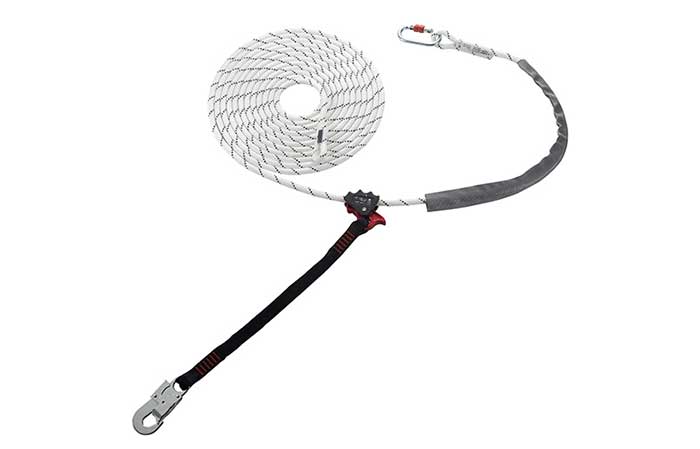
A roof lifeline is the line between you and the ground. Pick the wrong kind, anchor it badly or let it saw across an edge, and it fails when you need it.
For most pitched-roof work, use a vertical lifeline: a 5/8-inch rope tied to a roof anchor near the ridge, with a shock-absorbing rope grab that slides along it and clips to the back D-ring of your harness. First-time buyers should get a matched kit such as the Guardian Bucket of Safe-Tie, which includes the harness, anchor and 50-foot lifeline. Self-retracting lifelines are compact, but on a roof they need a Class 2 leading-edge rating when the anchor is at foot level or the line can run over the eave. OSHA’s limits apply either way: an anchor good for 5,000 pounds per person, no more than 6 feet of free fall, and no more than 1,800 pounds of arresting force (OSHA).
Quick picks
| Best for | Product | Type |
|---|---|---|
| First-time buyers | Guardian Bucket of Safe-Tie (00815) | Kit: harness, anchor, 50 ft lifeline with shock pack |
| Vertical lifeline | KwikSafety Tsunami | Rope lifeline with rope grab and shock absorber |
| Wet conditions | Guardian vertical lifeline assembly | 5/8 in poly-blend rope that sheds water |
| Moving along a long ridge | Frontline HLK1004 | 100 ft horizontal lifeline, up to 4 users |
| Compact, quick setup | Class 2 leading-edge SRL | Self-retracting lifeline rated for edge contact |
Product links on this page are affiliate links. See our disclosure at the end.
Types of roof lifelines
Vertical lifeline assembly (VLA)
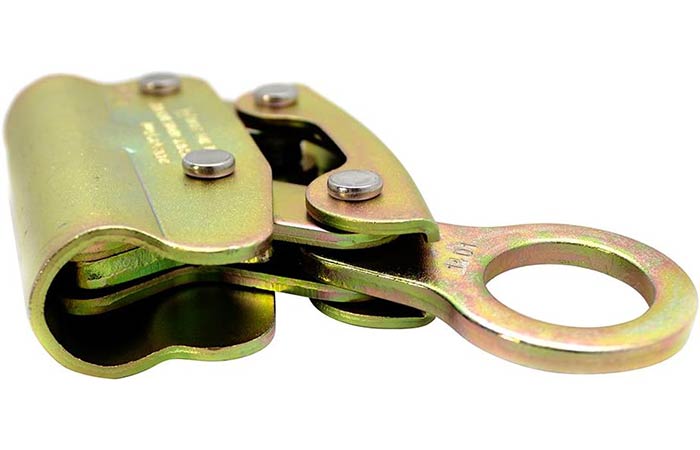
A rope runs from an anchor near the ridge down the roof. A rope grab with a short shock-absorbing lanyard rides on the rope and locks if you fall. It’s the standard choice for pitched residential roofs: cheap, light and long enough to reach the eave from the ridge.
Horizontal lifeline (HLL)
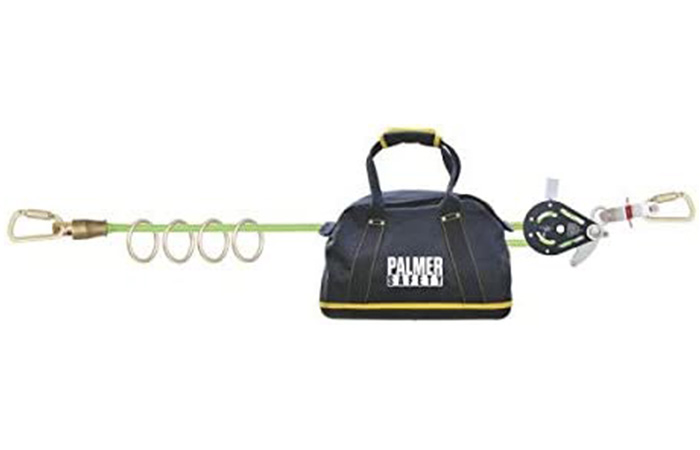
A line stretched between two anchors lets you move along the ridge or eave without re-anchoring. OSHA requires horizontal lifelines to be designed, installed and used under the supervision of a qualified person, because the line multiplies the load on the end anchors.
Self-retracting lifeline (SRL)
A spring-loaded drum pays out cable or webbing and locks in a fall, like a seatbelt. Standard (Class 1) SRLs are tested for overhead anchoring with no edge contact. On a roof the anchor is often at your feet and the line may run over the eave, which calls for a Class 2 leading-edge SRL tested for sharp edges and foot-level tie-off (FallTech).
The best roof safety ropes and lifelines
1. Guardian Bucket of Safe-Tie: best complete kit
The Guardian 00815 kit includes a 50-foot lifeline with an integrated rope grab and shock pack, a reusable temper anchor, and a full-body harness, packed in a 5-gallon bucket (distributor listing). It’s the easiest way to get a matched one-person system.
2. KwikSafety Tsunami
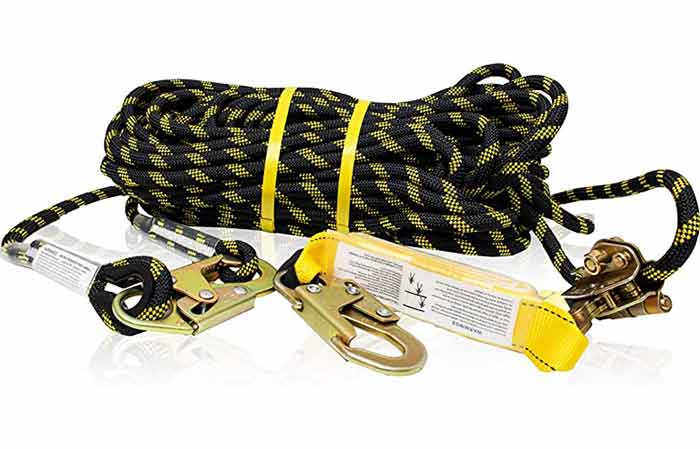
The Tsunami is a braided vertical lifeline sold in several lengths, with snap hooks, a rope grab and a shock absorber. Pick a length that reaches from your anchor to the eave with some to spare, without dragging across the yard.
3. Guardian vertical lifeline assembly
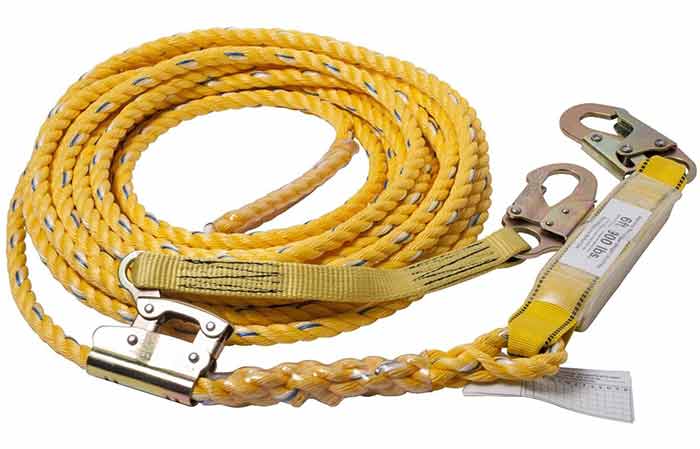
Guardian’s lifeline assembly uses 5/8-inch poly-blend rope that resists water and abrasion, with a positioning device, an 18-inch extension lanyard and a shock pack. It comes in lengths from 25 to 200 feet.
4. Malta Dynamics vertical lifeline
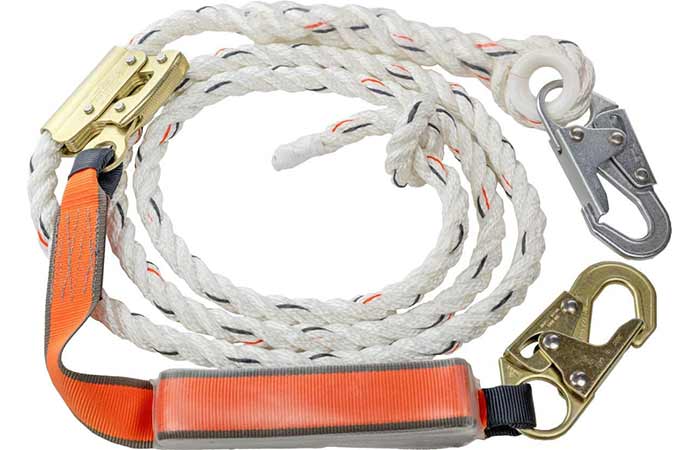
The Malta Dynamics VLA comes in 25- and 50-foot lengths with a rope grab, shock absorber, extension lanyard and snap hooks, for users from 130 to 310 pounds.
5. Peakworks safety lifeline
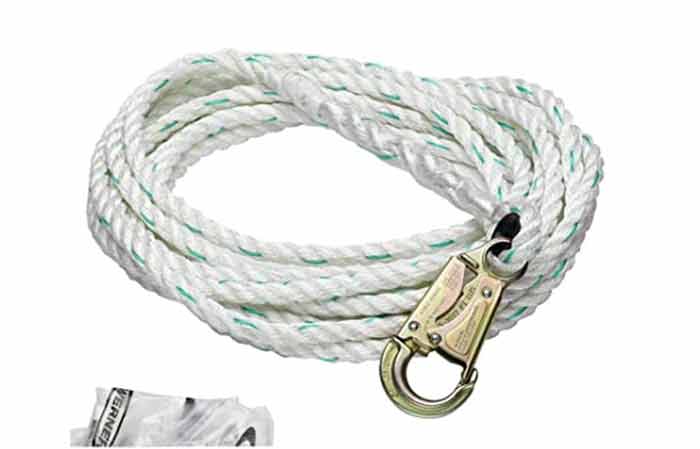
The Peakworks lifeline is 5/8-inch braided polyester in lengths up to 200 feet, with a snap hook on one end and a back splice on the other that stops the rope grab from running off. Buy the rope grab and lanyard to match if they’re not in the set you choose.
6. Welkforder vertical lifeline assembly
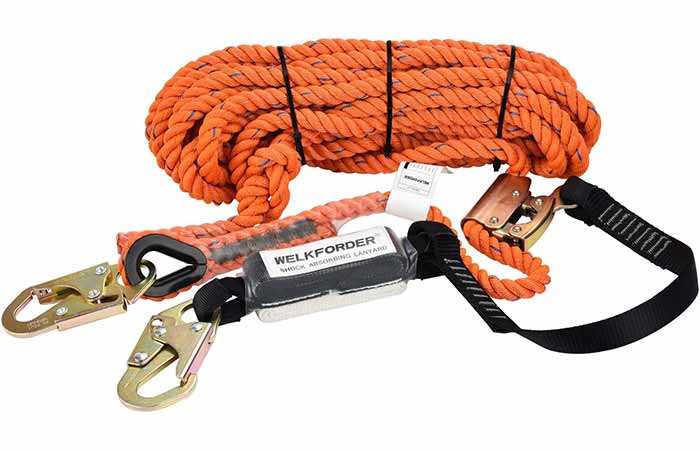
The Welkforder assembly combines a 5/8-inch three-strand polyester rope, a stainless rope grab, an energy-absorbing lanyard and two self-locking snap hooks.
7. Frontline HLK1004 horizontal lifeline
The HLK1004 is a 100-foot adjustable horizontal system for up to four users, with anchor straps, a tensioner with a tension indicator and O-rings for lanyards or SRLs. Have a roofer or other qualified person set the end anchors.
8. Frontline VLP50R3L
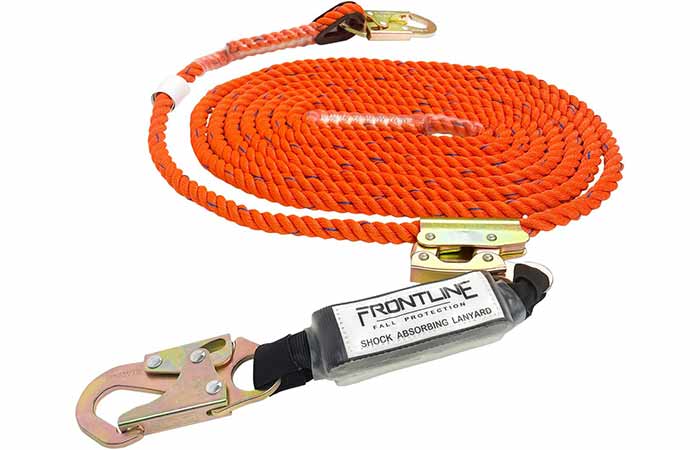
The VLP50R3L is a 50-foot polyester lifeline with a steel rope grab and an attached shock-pack lanyard that clips directly to the back D-ring.
9. AFP 100 ft vertical lifeline
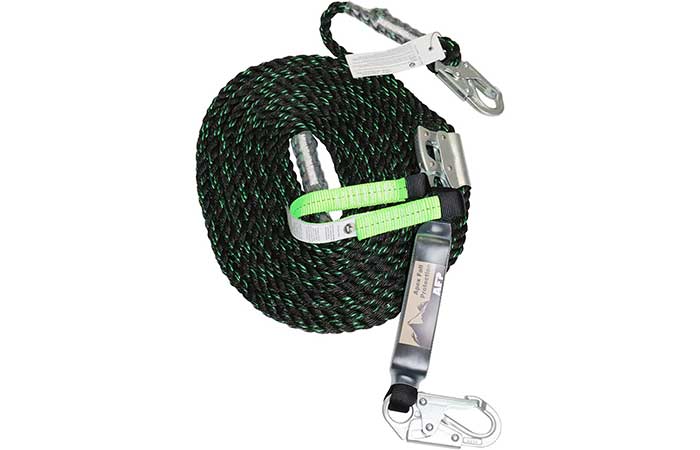
The AFP lifeline pairs a braided rope with a trailing rope grab and two snap hooks; at 100 feet it suits long roof runs.
10. Self-retracting lifelines
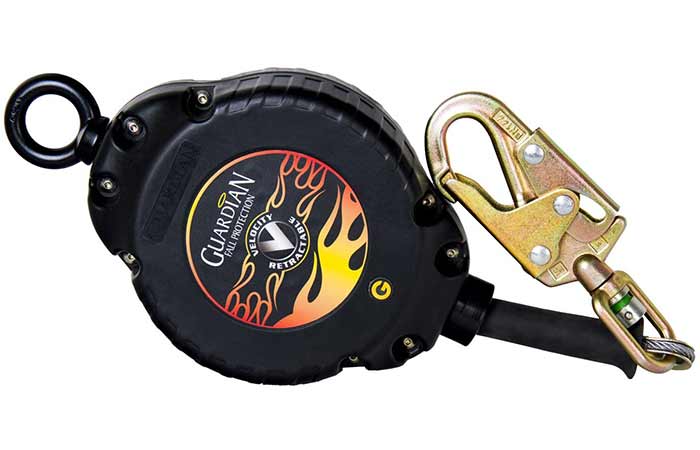
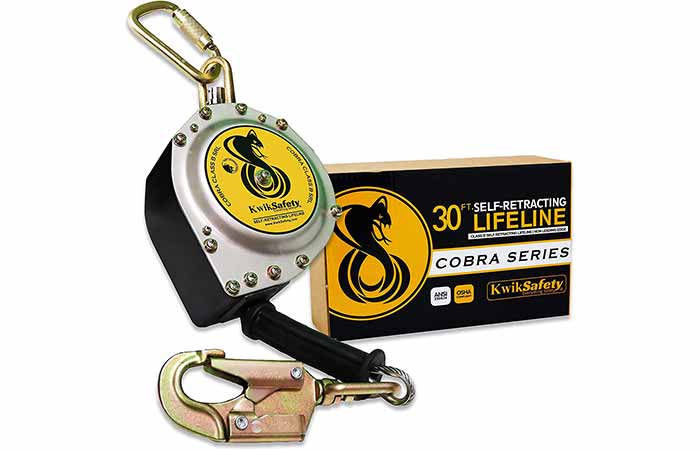
The Guardian Velocity cable SRL and the KwikSafety Cobra 30 ft SRL are compact galvanized-cable units. Check the label before using any SRL on a roof: unless it’s marked Class 2 or leading-edge, it’s meant for overhead anchoring only. For foot-level tie-off on a roof, choose a Class 2 leading-edge SRL.
How to use a roof lifeline
- Install the anchor. Near the ridge, through the sheathing into a rafter or truss with the specified fasteners. The anchor must hold 5,000 pounds per person or be engineered by a qualified person (OSHA interpretation). Never tie off to vents, chimneys, gutters or antenna mounts.
- Attach the lifeline to the anchor with a locking snap hook, and run it straight down the roof to where you’ll work.
- Put on and adjust your harness, then attach the rope grab’s lanyard to the back D-ring. Make sure the grab is on the rope the right way up; most are marked with an arrow pointing toward the anchor.
- Work below the anchor. Keep within a narrow band below it to avoid a swing fall. To work farther along the roof, move the anchor or use a horizontal lifeline.
- Protect the rope from edges. Keep it off the eave edge, sharp flashing and hot or abrasive surfaces.
- Plan the rescue before you start, and never work alone.
Inspection and care
- Inspect the rope, rope grab, shock absorber, snap hooks and anchor before each use, as OSHA requires (OSHA 1926.502(d)(21)). Look for cuts, fuzzing, glazing, burns, stiff spots, rust and missing labels.
- Remove from service any component that has arrested a fall, or whose shock absorber has deployed.
- Store ropes clean and dry, coiled loosely, out of sunlight and away from chemicals.
Rather have a pro handle it?
Roof cleaning means working at height with chemicals on a slippery surface. See what professional roof cleaning costs in your area before you buy the gear. Free, no sign-up.
See local roof cleaning prices →FAQs
What rope is used for roof fall protection?
Usually 5/8-inch synthetic rope (polyester or poly blend) sold as a vertical lifeline assembly with a matching rope grab. Don’t use generic hardware-store rope; the rope grab is tested with a specific diameter and construction.
How long should a roof lifeline be?
Long enough to reach from the anchor to the farthest point you’ll work, plus a little extra. A 50-foot line covers most single-family roofs.
Can I use a self-retracting lifeline on a roof?
Only one rated for that use. If the anchor is at foot level or the line can run over the edge, use a Class 2 leading-edge SRL.
Related guides
- Best roof safety harnesses and kits
- How to put a ladder on a sloped roof
- How to stabilize a ladder for roof work
- How to remove snow from a roof
- How to remove moss from a roof
Updated November 2026. Sources: OSHA personal fall arrest systems eTool; OSHA interpretation on 1926.502(d); fall protection anchor requirements; FallTech, leading-edge SRLs; OSHA 1926.502(d)(21) inspection. Product details from manufacturer and retailer listings.
Affiliate disclosure: RoofScour is reader-supported. As an Amazon Associate we earn from qualifying purchases made through links on this page, at no extra cost to you. Product picks follow the criteria in the article, not commission rates.