
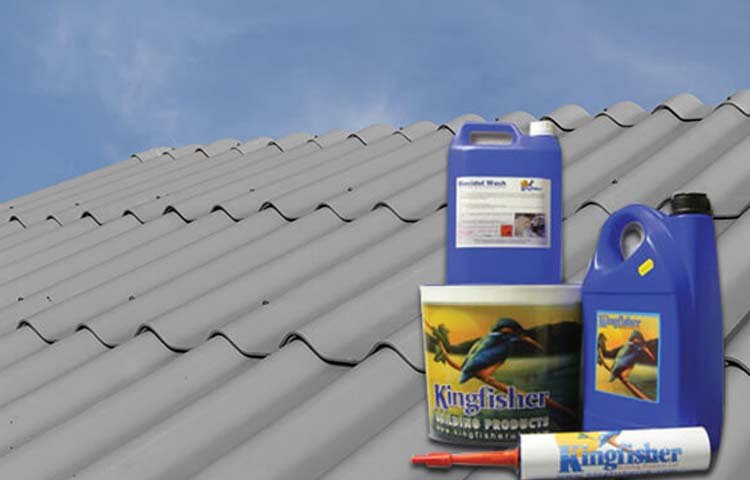
Having a leak-proof roof isn’t easy since you’ll be dealing with water which has proven to be quite tricky where most roof types are concerned. Such a roof requires various aspects among them proper and careful craftsmanship and use of the right tools.
Among the items used to make roofs and do repairs on roof leaks are roof sealants. These are liquid and semi-liquid substances that, when applied, provide a waterproof seal on the roof and other areas in the home. Finding the right roof sealant for your type of roof is usually something left to the experts although, with knowledge, you can always get the right sealant for your type of roof leak.
Today, if you walked into a hardware shop and asked for a roof sealant, the sales rep will likely show you several walls covered with shelves all with different types of roof sealants. To help you make the right decision, we have compiled a list of 9 of the best roof sealants at the moment. We also point out which ones are the best for specific types of roofs.
Product links on this page are affiliate links. See our disclosure at the end.
1. Henry HE587372 Roof Coating
Simply referred to as the Henry 587, this white roof coating is another great option if you need a roof sealant that will last you years.
It’s an elastomeric roof coating formulated using fillers, resins and titanium dioxide pigments. These ingredients give your roof a very resilient coating that won’t wear off no matter how harsh the elements may be in your area.
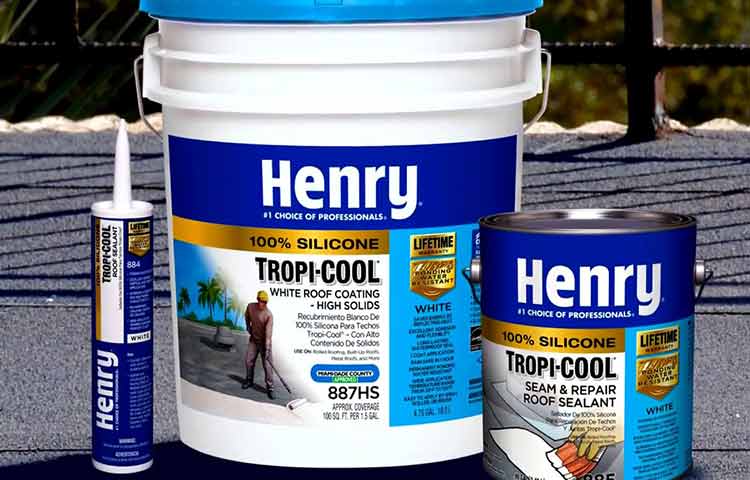
The Henry 587 has a high peel strength coupled with an impressive solar reflectance value, high solar reflectivity and one of the best longevity indices all of which offer protection from the harsh weather.
A fascinating feature of this roof sealant is that it allows for the escape of water vapor from the underlying substrate to keep the roof dry and properly aerated. This feature is possible when the coat has cured properly.
Once applied and left to cure properly, the coat forms a membrane that’s permeable on your roof. This way, while it keeps out water from your roof substrate, it allows any moisture from below to escape.
In keeping the inside of your house conducive, this coat releases up to 91% of the heat from the sun. Its elastomeric feature means that it can expand and contract without any cracks. Better still, it doesn’t need any primer to work.
Pros
- Made with titanium oxide pigments, fillers and resins for durability.
- Permeable and breathable coat allowing moisture to escape for a dry substrate.
- Releases up to 91% of the sun’s UV heat keeping the inside of the house cool.
- Doesn’t crack when expanding and contracting.
- Does not require a primer to work properly.
Cons
- Doesn’t dry instantly.
While it doesn’t dry instantly, the result after its curing is excellent.
2. Sashco Through The Roof! Clear Roof Sealant
Sashco Through The Roof! is a clear, synthetic rubber patching sealant made for the small leaks that cause most roof headaches: cracked flashing, nail holes, vent boots and seams.
Its biggest strength is the weather. It can be applied to a damp surface or even during rain, and it won’t freeze in cold weather, so you can stop a leak when it shows up instead of waiting for a dry week.
It cures crystal clear, resists UV and can be painted, so a repair on a visible part of the roof doesn’t leave a black smear. It comes in a caulk-gun cartridge for spot repairs and in brushable cans for larger patches.
Pros
- Can be applied in wet conditions and cold weather.
- Clear, paintable finish that blends in.
- UV resistant.
- Sticks to most common roofing materials.
Cons
- Made for repairs and seams, not for coating a whole roof.
- Costs more per ounce than asphalt roof cement.
If you want one tube on the shelf for emergency leak repairs, this is the one to keep.
3. Dicor RP-CRC-1 Rubber Roof Acrylic Coating White
This acrylic roof sealant is for rubber roofs and doesn’t do well with other surfaces. However, in this category, it’s the best you can get. It’s a two-part formula combining a cleaner/activator with an acrylic coat which extends the life of your EPDM rubber roof.
The Dicor coating dries fast saving on time and labor costs with the latter being cut by more than 25%. Once applied, this coat provides protection form UV rays and all other harsh aspects of the environment. Just two coats are enough for your rubber roof to look, feel and work as new.
Pros
- Two-part formula with cleaner and acrylic coat.
- Renews rubber roofs by adding a waterproof acrylic coat.
- Quick drying.
- Provides protection against the sun’s UV rays.
Cons
- Only works on rubber roofs.
If you have a rubber roof in need of some sealing or a fresh coat of protection, this is a no-brainer.
4. Henry 208 Wet Patch Roof Cement
Henry 208 Wet Patch is an asphalt roof cement built for leaks you have to fix right now. Henry rates it to stop leaks instantly on wet or dry surfaces, even in driving rain or standing water.
You can apply it from 20°F to 120°F, and it spreads easily in cold weather. That makes it a good winter repair product. Use it around chimneys, vents, skylights, flashing and metal edging.
It comes in a cartridge for small cracks and in quart and gallon cans for trowel-applied patches. For a larger hole, embed a strip of roofing fabric in the first layer and cover it with a second coat.
Pros
- Bonds to wet surfaces and works in the rain.
- Applies in cold weather.
- Inexpensive and easy to find.
- Available as a cartridge or a trowel grade.
Cons
- Black asphalt finish, so it shows on light roofs.
- Not for thick application on vertical surfaces in hot weather.
- Solvent-based: clean up with mineral spirits.
For a fast, cheap fix on an asphalt or flashing leak, Henry 208 is hard to beat.
5. Liquid Rubber Color Waterproof Sealant White
For metal roofs, Liquid Rubber’s color waterproof sealant is the best in our trials. Besides being excellent with metal surfaces, it can work with others such as wood, concrete and others. It’s easy to apply and will give your roof a great waterproof coat in a short while.
This sealant works with both pitched and flat roofs besides planter boxes, metal roofs, ponds, foundations, wood, metal, sheds, basements, concrete and many more. It’s a major assurance that you can use it on most surfaces in the home.
It’s also one of the easiest to apply as it can be applied just like paint. Use a roller, brush and paint sprayer for a great finish. In our review, heavier coats of this material are better at waterproofing surfaces than lighter and thinner ones. Unlike other types of sealants, you don’t have to finish the whole can as it’ll remain intact and ready for the next shift even when half-used.
What we loved about this sealant is its environmental friendliness. It’s a water-based formula without any harmful solvents, odors or VOCs.
You can use it outdoors or indoors without a mask and won’t harm either you or your pets. The only thing we were not too impressed with is that it works best when applied on dry surfaces and can take between 24 to 48 hours to cure properly. This is due its being water-based.
Pros
- Can be used with most surfaces at home with the best results on metal.
- Works on pitched and flat roofs besides planter boxes, metal roofs, ponds, foundations, wood, metal, sheds, basements, concrete and many more.
- Easy application process just like normal paint.
- Environmentally friendly and harmless to both people and pets.
- Both indoor and outdoor application.
Cons
- Doesn’t dry instantly.
This is an easy pick for when you need a new waterproof coat on your metal roof.
6. Kool Seal Elastomeric Roof Coating
Kool Seal’s white elastomeric roof coating is a 100% acrylic coating for whole-roof protection rather than spot repairs. Rolled on, it forms a thick, rubber-like layer that expands and contracts with the roof, so it doesn’t crack as temperatures swing.
The bright white finish is the other draw. It is listed as reflecting over 90% of the sun’s rays, which keeps the roof surface cooler and can cut cooling costs under low-slope and metal roofs.
Like most acrylic coatings, it needs a clean, dry roof and a dry forecast to cure, and it is not the right choice where water sits for days. For ponding areas, use a silicone coating such as #7 below.
Pros
- Highly reflective white finish.
- Flexible film that moves with the roof.
- Water-based: easy cleanup.
- Good value per square foot for whole-roof coverage.
Cons
- Needs dry weather to cure.
- Not suitable for areas with standing water.
For coating an entire low-slope or metal roof on a budget, Kool Seal is a solid choice.
7. PrimeSource Building Products GCESRC2 Roof Coating
This PrimeSource roof coating is the best silicone roof coating and great for all types of roofs be they flat or pitched. The fact that it dries up in about 2 hours means that you’re safe in using it during the rainy season as it’ll not be washed off when rain comes after its application.
The advantage with silicone sealants like this one is that they’re naturally elastomeric in that, once in place, they can’t crack or peel off due to the expansion and contraction caused by changes in temperature.
The GCESRC2 provides the best seal when it comes to ponding water on flat roofs and extreme temperatures (between 32-120° Fahrenheit). You also get UV protection for your roof with this sealant. With a quick drying formula that doesn’t require a primer, your roof will be set for the rains in no time.
You also get good chemical and solvent resistance and will work with various surfaces such as aged EPDM, aged asphalt, cap sheet, aged TPO/CPA, concrete, composite, metal, fiberglass, torchdown, bitumen, sprayed polyurethane foam, and other flat or pitched surfaces.
You thus can rest assured that it’ll work with most places in the home including your RV, garage, house and patio without a hitch.
Pros
- Works with both flat and pitched roofs.
- Dries up in a short time.
- Elastomeric properties to prevent cracking when temperatures change.
- Provides protection against UV rays.
- No primer needed.
- Resistant to solvents and other chemicals.
- Works with most surfaces in the home and commercial buildings.
Cons
- Doesn’t dry instantly.
With this root sealant, your roofing needs are taken care quite well. Silicone is naturally water-resistant and will thus provide a good deal on your roof.
8. Geocel 2300 Construction Tripolymer Sealant
Geocel 2300 is a cartridge sealant that roofers and gutter installers keep in the truck. It comes in a standard 10.3 oz tube, so you apply it with a caulk gun instead of a brush or trowel.
It stays flexible and is designed not to crack with normal expansion and contraction. It sticks to many building surfaces, even when they are damp. It is asphalt shingle compatible, UV resistant, paintable, and can be applied over itself when you need to reseal.
It is available in crystal clear, white and metal roof colors. That makes it a good match for gutter seams, end caps, flashing and metal roof trim.
Pros
- Bonds to damp surfaces.
- Stays flexible, doesn’t crack.
- Asphalt shingle compatible.
- Clear and color options, paintable.
Cons
- Small cartridge: for joints and seams, not large areas.
- Takes several days to fully cure.
For sealing gutter seams, flashing and small roof joints, Geocel 2300 is the cartridge sealant to buy.
9. EternaBond RoofSeal Sealant Tape
EternaBond RoofSeal is a sealant tape rather than a liquid. A 35 mil layer of EternaBond’s MicroSealant adhesive is bonded to a UV-stable backing. You clean the area, peel the liner and roll the tape on with pressure. There is nothing to mix or brush.
It bonds to almost all roofing materials except silicone, including EPDM, TPO, most PVC, metal, wood and masonry. That makes it a favorite for RV roofs, metal building seams, flashing, skylights and gutters.
It stays flexible down to -70°F and comes in rolls from 2 inches up to 36 inches wide in white, black, gray or tan.
Pros
- One-step repair: no mixing or brushing.
- Bonds to EPDM, TPO, metal and most roof membranes.
- UV-stable backing for exposed use.
- Flexible in extreme cold.
Cons
- Doesn’t stick to silicone surfaces.
- Expensive per foot compared with liquid sealants.
For seams, flashing and RV roof repairs, a roll of RoofSeal is the cleanest fix on this list.
Best Roof Sealants by Surface and Roof Types
The best roof sealant in each category are as follows:
1. Best All-Round Roof Sealant
With the Cromapol coating no longer widely available, the Henry HE587372 roof coating is the best all-round pick from this list. It works on most common roof surfaces and is easy to find in the US.
2. Best Rubber Roof Coating
If you have a rubber roof or simply need a rubber sealant for your roof, the Rubberseal Liquid Rubber Waterproofing and Protective Coating is your best option. Not only does it last for ages, but it also provides a coat that saves on your household energy needs.
3. Best for Flat Roofs
Flat roofs offer a challenge in that water doesn’t run off them as easily as it does on pitched roofs. You need a coating that can sit under standing water without breaking down. The PrimeSource GCESRC2 (Gaco) silicone roof coating is the best fit here: silicone isn’t damaged by ponding water, and it can take rain about two hours after application.
4. Best RV Sealant
For those always on the move in their RV, the best sealant for your RV’s roof and other parts is the Dicor RP-CRC-1 Rubber Roof Acrylic Coating. Besides being easy to apply, it works with a lot of surfaces enabling you to seal up any annoying holes on your RV’s whole body.
5. Best for Flashing
Flashing is important in keeping the spaces between shingles watertight. However, it tends to wear out when exposed or not reinforced. Using EternaBond RSW-6-50 RoofSeal Sealant Tape adds life to your flashing especially in sunny areas.
6. Best for Ponding Water
For flat roofs and areas that easy experience ponding water, the GacoRoof GR1600-1 White Silicone Roof Coating is your best bet. Being a silicone-based sealant, it doesn’t dissolve or get damaged by pooling water.
7. Best Silicone Roof Sealant
If silicone is what you need for your roof, our choice is the PrimeSource Building Products GCESRC2 Roof Coating. It’s an easy choice for those with RV vehicles or flat roofs where ponding is common. A good coat of this sealant will keep your surfaces waterproof for years to come.
8. Best for Roof Leaks
While all the sealants on this list can help stop and prevent leaks on your roof and other surfaces, the Liquid Rubber Seam Tape, which can be combined with other roofing sealants, is the best option as it provides a very durable instant seal at a very affordable price.
9. Best for Metal Roofs
For metal roofs, we highly recommend the Liquid Rubber Color Waterproof Sealant for its excellent finish on metal surfaces. It’s easy to apply and will cover metal surfaces without compromising on the good qualities of metal roofs such as longevity.
10. Best for Roof Shingles
For spot repairs on shingles, use Geocel 2300 Tripolymer Sealant. It is asphalt shingle compatible, sticks even when the surface is damp, and comes in crystal clear, so lifted tabs and cracked shingles can be sealed without a visible black patch.
Buying Guide
When in the market for a roof sealant, you should consider the primary types of roof sealants in terms of their pros, cons and how suitable they are to your type of roof.
The types of sealants and their characteristics are as follows:
1. Rubber Roof Sealants
Rubber roof sealants and coatings are among the most expensive on the market. However, they’re also the most durable and last a lifetime when applied properly. They’re flexible and will thus not develop cracks whenever there are temperature changes. Their levels of solar reflectance are also quite impressive.
2. Acrylic Roof Sealants
Most roof sealants and coatings are made of acrylic material of various qualities. The good thing with this type of coat is that it’s great for both dry and wet conditions and will last long in either weather. Also, they’re meant to reflect UV rays meaning they’ll protect your roof in the time they’re in good condition. You can get them in both solvent and water-based variants.
The only issue we found with these kinds of sealants is that they come in various qualities and choosing the right one can be quite hard. Generally, they’re very reliable roof sealants.
3. Sealant Tapes
Sealant tapes provide a good seal on most roofing materials especially if you apply it when the surface is dry. They’re also some of the cheapest sealants on the market. Their wide availability is a great addition as well.
Their only issue is not being strong enough on some surfaces such as wood.
4. Silicone Roof Sealants
Silicone roof sealants are favored for their high-quality seals and the fact that they perform very well whether in the heat or the rain. As such, they’re the best when a given area experiences both hot and rainy seasons such as the tropics.
They also have a great degree of UV reflectance and will thus keep the inside of buildings cool at all times. The main issue with these roof sealants is that they’re quite costly.
5. Polyurethane Roof Sealants
For these kinds of sealants, the only available formula is a solvent one although you get aromatic and aliphatic types. The aromatic variants are best suited for colder weather since they don’t fare so well against UV radiation in hot areas.
The advantage with polyurethane roof sealants is that they can generally withstand a lot of abuse. They can thus be used for roofs with lots of foot traffic or in harsh weather conditions. The only issue is that the aromatic formula doesn’t do very well in hot regions.
6. Roof Sealant Spray
Roof sealant spray is often made of a rubber formula and best for hidden roof areas. You simply point at the leaking spot and spray the sealant. It works best when the area is dry. Most of them provide seals which are as good as other types of sealants can provide.
7. Roof Sealant Caulk
For minor roof leaks during light rains and in regions which don’t experience heavy rains, roof sealant caulk can be used. However, it doesn’t provide as tight and long-lasting a seal as other types of sealants. It is however a very cheap option for sealing the areas around chimneys.
8. Clear Roof Sealant
Clear roof sealants are best used when you want to waterproof your roof without changing the color of the roof. This can be a metal, rubber, shingle or other roof whose color you like. The downside to these types of roof sealants is that they don’t usually have good thermal properties and are quite costly.
9. Roll-on Roof Sealant
A roll-on roof sealant can be any type of sealant especially the ones with the properties similar to those of paints. Chances are high that, if you can use a brush to apply the sealant, you can as well use a roller to apply it.
These roof sealant types can be used either individually or in combination for a single roof since each one works best for certain roof types and areas on the roof.
Further Reading
Affiliate disclosure: RoofScour is reader-supported. As an Amazon Associate we earn from qualifying purchases made through links on this page, at no extra cost to you. Product picks follow the criteria in the article, not commission rates.